Rice University

Research

Thermal history model

Mantle Evolution

Mantle melting and thermal evolution of Earth

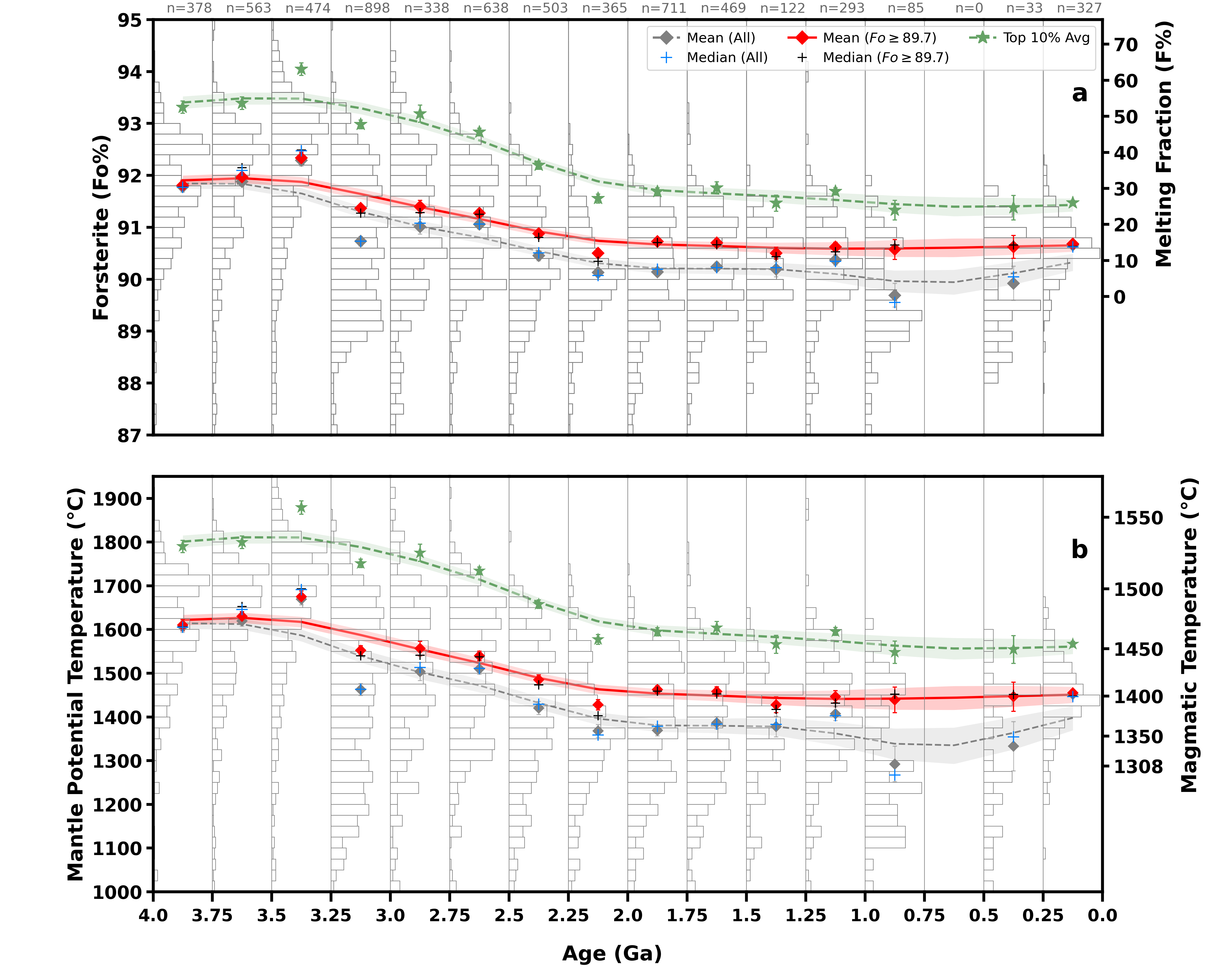
Understanding how Earth's mantle cooled over geological time is central to our knowledge of plate tectonics and habitability. Mantle peridotites preserve records of past melt extraction through olivine forsterite content, Re-Os depletion ages, and whole-rock major-element systematics.

By compiling a global xenolith dataset and applying thermodynamic modeling, I reconstruct secular changes in mantle potential temperature. My results reveal a stepwise cooling history with a transition marking the onset of modern-style subduction.
Crustal heating model

Crustal Differentiation

Crustal heating and redistribution of radioactive elements

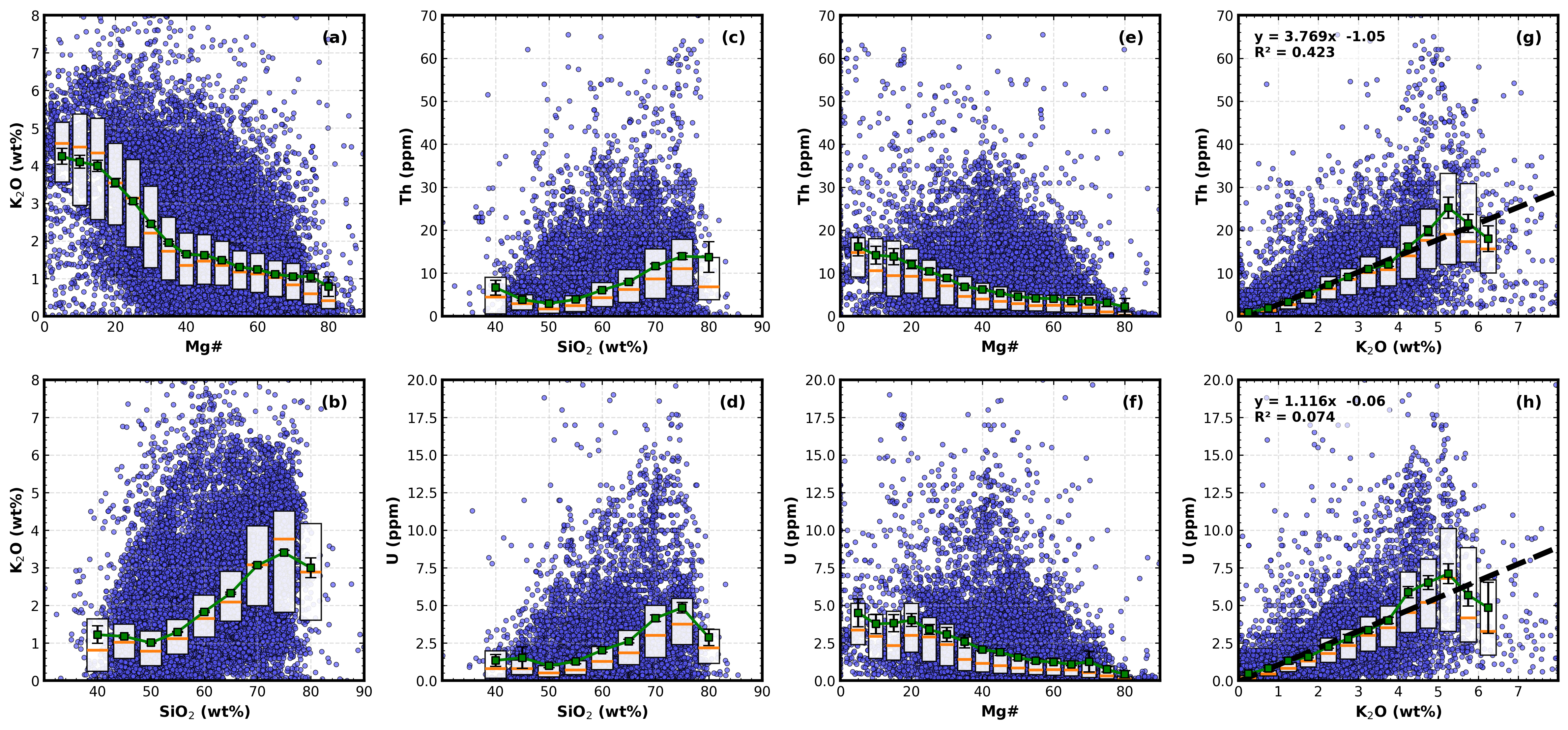
Earth's crustal thermal structure is strongly influenced by the distribution of heat-producing elements such as uranium, thorium, and potassium. During crustal differentiation, these elements become concentrated in the upper crust while the lower crust becomes depleted.

I combine geochemical datasets with numerical modeling to examine how heat-producing element distributions affect crustal thermal gradients, melting behavior, lithospheric stability, and long-term craton survival.

Two-phase flow model

Magmatic Transport

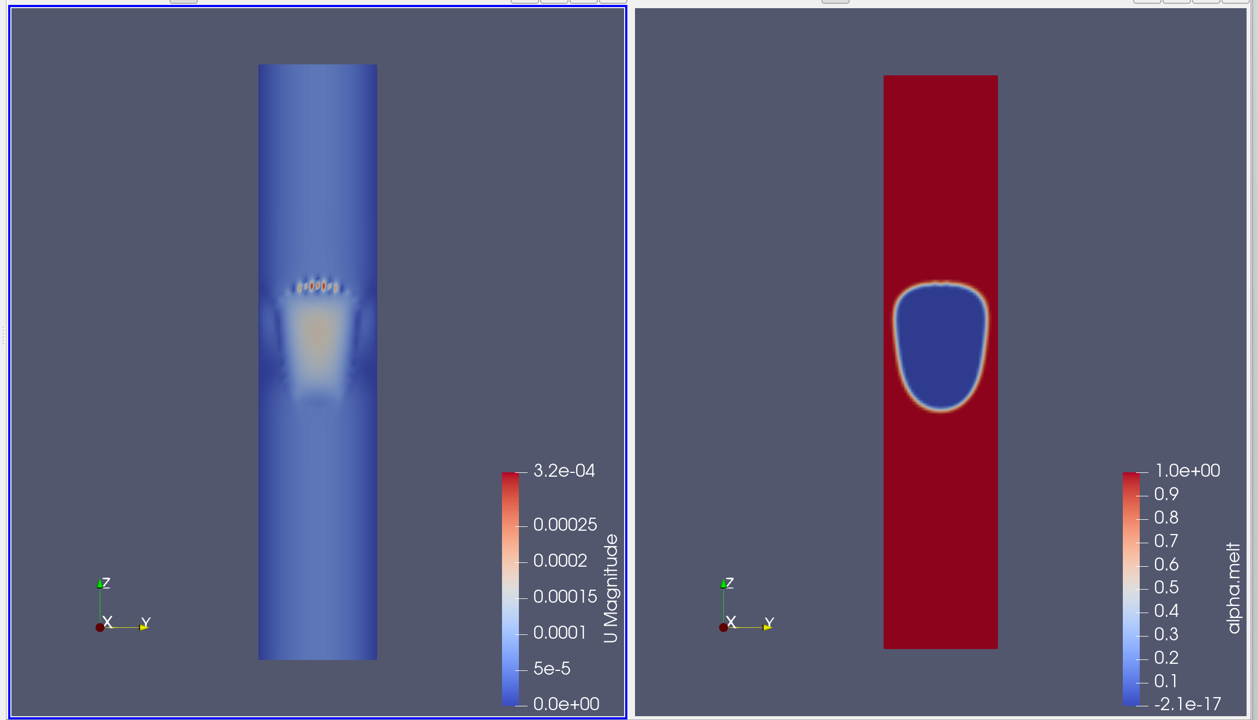
Two-phase flow modeling of sulfide migration in crystal-rich mushes

Magmatic sulfide liquids segregate through crystal-rich mushes to form economically significant ore deposits, but the mechanisms controlling their migration remain poorly understood.

I use two-phase flow simulations to examine how sulfide fraction, crystal framework, and mush compaction influence the focusing and transport of sulfide liquids in layered intrusions and komatiitic conduits.